International Dry Fruits & Spices
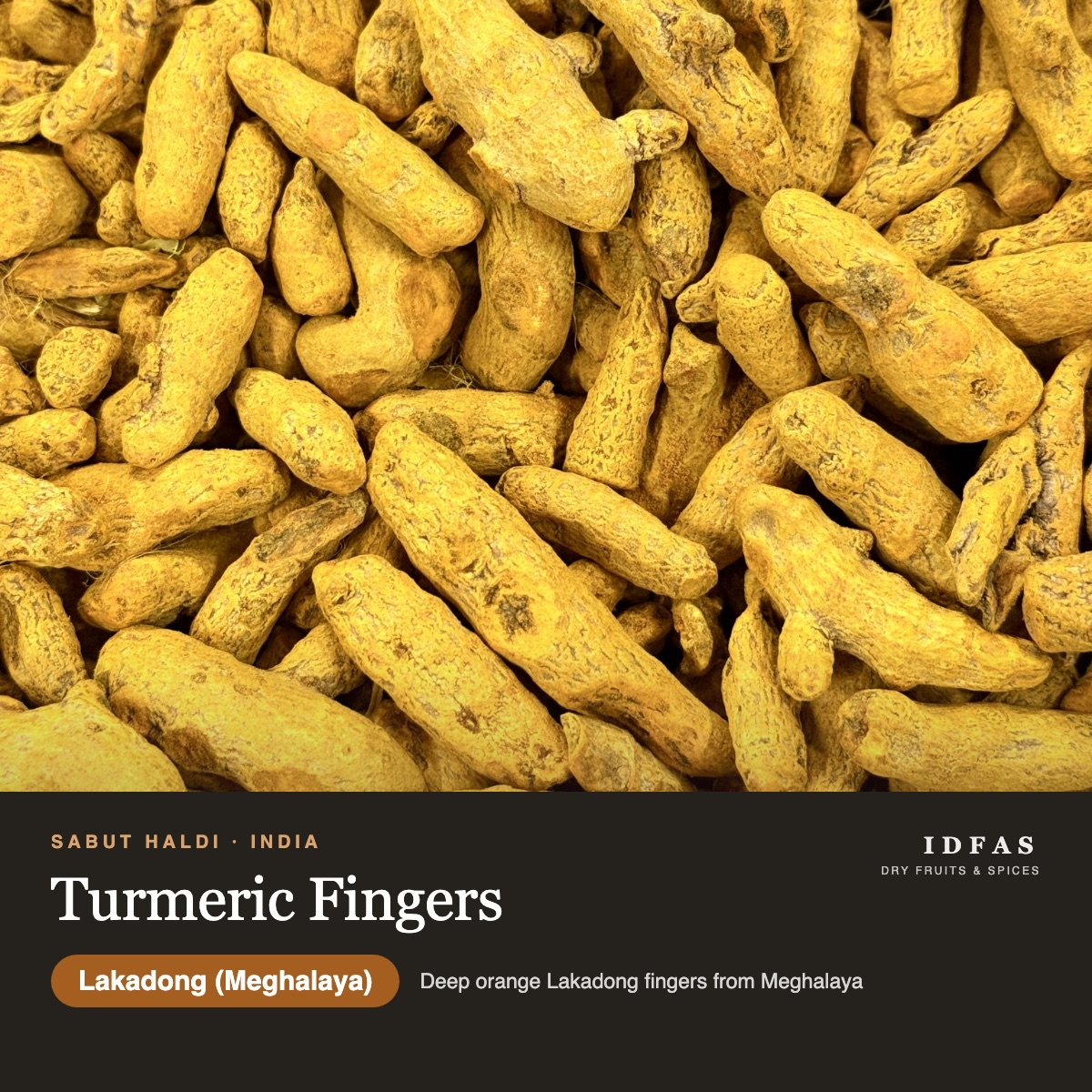
Lakadong Turmeric Fingers (Sabut Haldi) - Deep Orange, Meghalaya
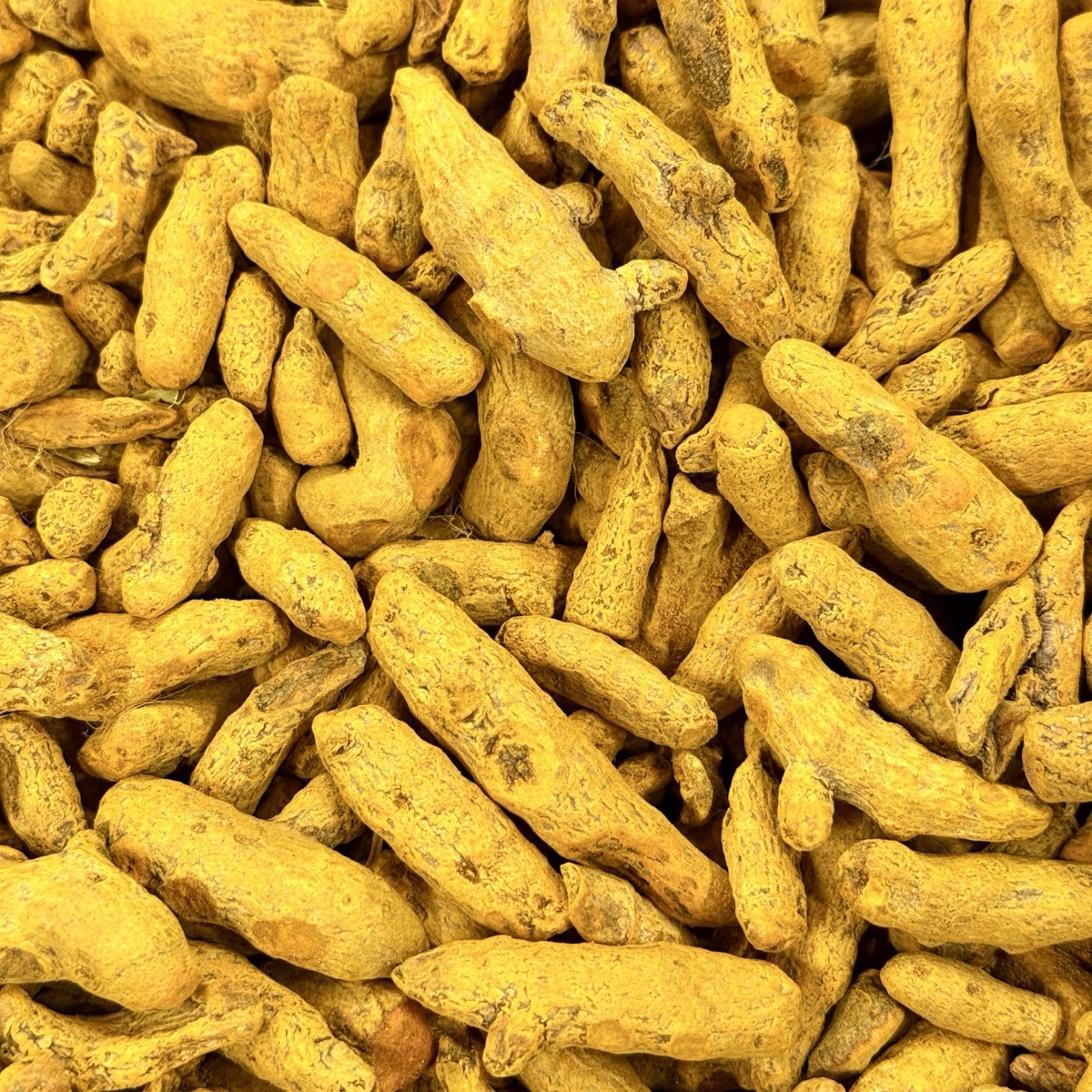
Lakadong turmeric comes from the Jaintia Hills of Meghalaya, named after the village of Lakadong, and it is the most prized sabut haldi in our range. Break a finger and the inside is a deep orange, far richer than the yellow of common turmeric.
About the Lakadong grade
Lakadong is an origin grade: a local turmeric grown in the hills of Meghalaya and known in trade for its intense colour. The dried fingers are smaller and darker than our Salem, Erode or Rajapuri, with a deep orange core. A little of the powder colours a dish strongly, so you use less. It suits specialty retailers, restaurants and home cooks who grind their own haldi.
Taste and texture
Earthy, warm and slightly bitter with a pronounced, almost peppery aroma; the colour comes through even in small amounts.
How to use
- Ground fresh for curries, dal and sabzi
- Haldi doodh with milk and jaggery
- Homemade sambar and curry masalas
- A pinch in rice, khichdi and kadhi for colour
Packing options
Lakadong fingers are packed in polythene pouches of 100 g, 250 g, 500 g and 1 kg and PET jars of 100 g, 250 g and 500 g. Specialty stores, restaurants, retail counters and wholesale (B2B) buyers can order loose (raw) 1 kg, 5 kg and 10 kg bags.
Storage and shelf life
Whole fingers keep well: store them airtight in a cool, dry place and grind small batches as needed. Shelf life is 24 months from packing.
FAQs
Why is Lakadong turmeric more orange?
It is a distinct Meghalaya variety with a naturally deeper colour than common turmeric.
How do I grind whole turmeric fingers?
Break them into small pieces with a pestle, grind in short bursts in a dry spice grinder, then sieve.
Do I use as much as regular turmeric?
Usually less; start with about half the usual amount, as the colour is stronger.